News
A Single Afternoon, the Work of Years
May 7, 2026
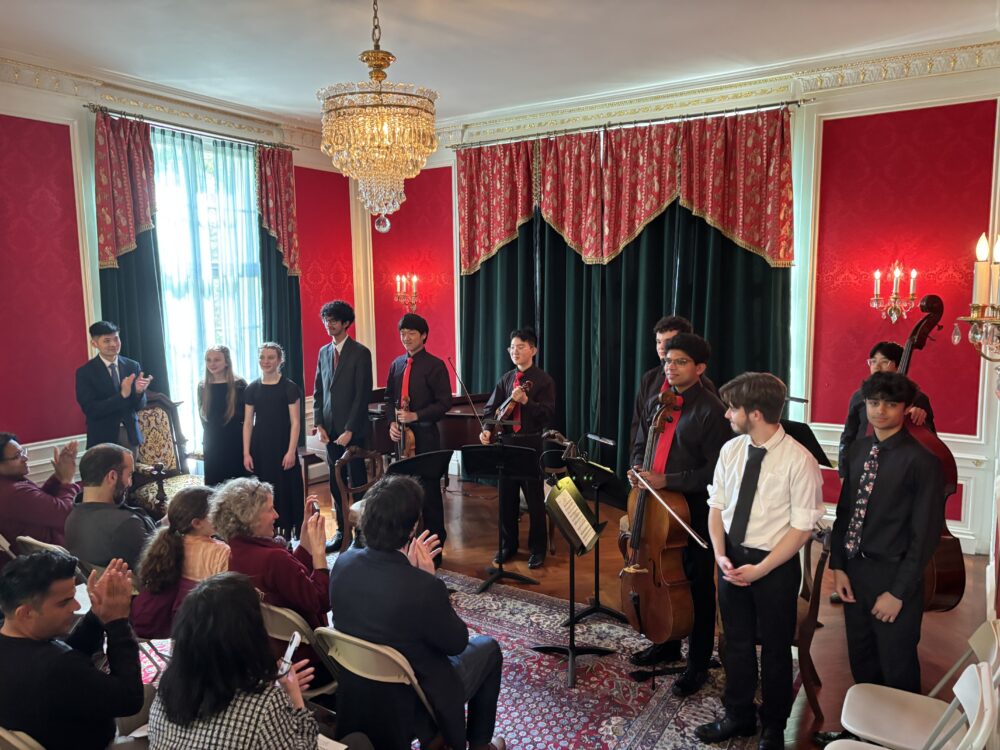
The Salon is a different kind of Sinfonia performance. Held last month in an intimate setting, it pulls each student out from the safety of the section, places them close enough to the audience to see every face, and asks them to offer something of themselves. As Alex, a violist in PS and PSCO, described it, a typical Sinfonia concert involves a great orchestra and a huge audience. The Salon is “a lot more intimate,” with smaller ensembles, solo pieces, and groups no larger than five.
Six of the students who played sat down with us afterward. What they described was an afternoon that does something a regular concert cannot, and that reveals what years inside Sinfonia have built in them.
For Lucia, a violinist who started a few years ago in PSS and is now in PS and PSCO, the smaller scale opens up something rare. Without a full orchestra around her, she can bring more of her own musical interpretation to a piece and share that story with the audience. Solo playing also asks for a kind of partnership that orchestral playing rarely demands. She and her pianist, she said, have to “breathe as one” to make sure they are not just playing together but actually making music together.
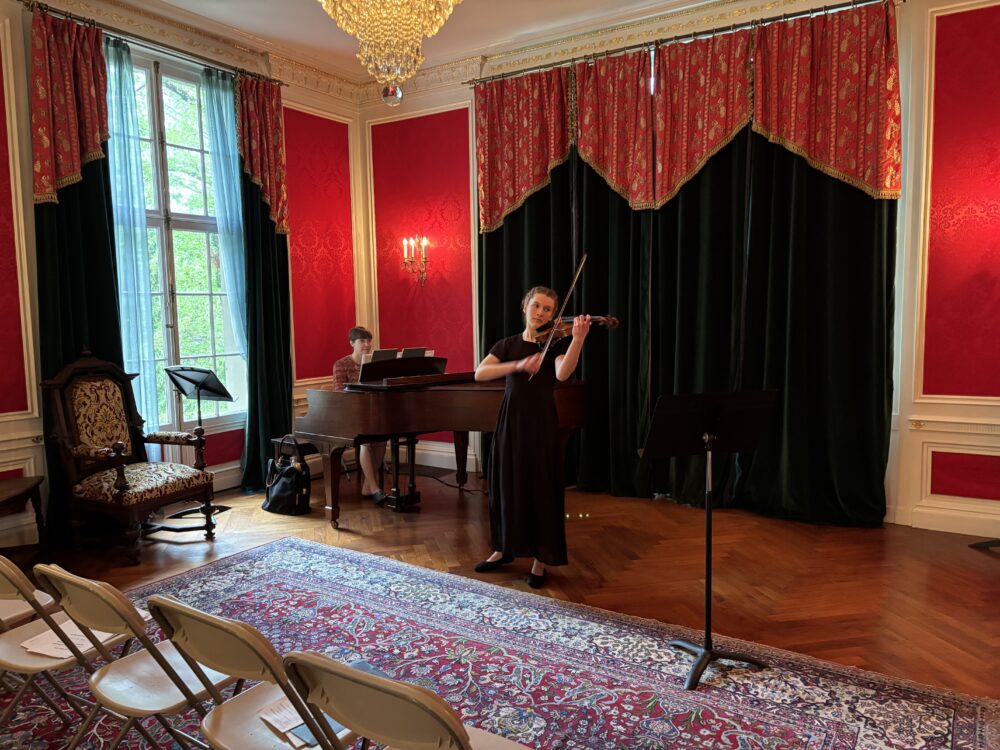
The intimacy reaches the audience too. Aldo, a cellist in PS, noticed that in an orchestra performance the lights are dimmed and the audience is far away, but at the Salon, “you can see how they’re interacting with you, and you could sort of even respond.” That two-way exchange continues after the music ends, when students and guests gather for a reception. For Jeffrey, a violinist in PS and PSCO, those moments are part of the afternoon’s gift, the chance to speak one-on-one with fellow guests, parents, and the conductors who are in the audience.
For students used to playing as part of an ensemble, the Salon is a different kind of work. Alex spoke to its vulnerability:
“When you’re a soloist, it can get very humbling. You’re very vulnerable because everyone’s looking at you, what you’re playing. In an orchestral setting, the goals are different, trying to blend in, connect with the other sections. But solo, it’s all you.”
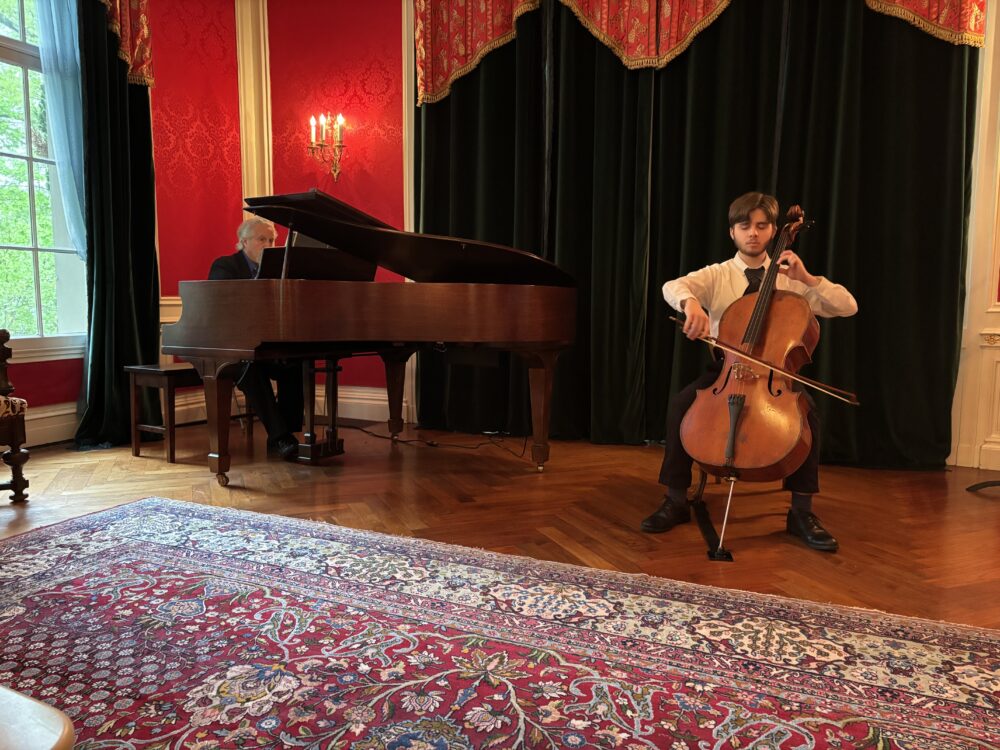
That exposure is also, as Aldo put it, “an opportunity to develop your confidence.” Stepping forward in this way is a different kind of musical work. It is also a different kind of growth.
That growth is what gives the Salon its weight. The afternoon is brief, but what it shows is the work of years. Vrishab, a violinist in PS and PSCO, captured the spirit behind the event when he said simply that Sinfonia “has done a lot for us as musicians and also as people. So it’s just nice to sort of give back in that way.”
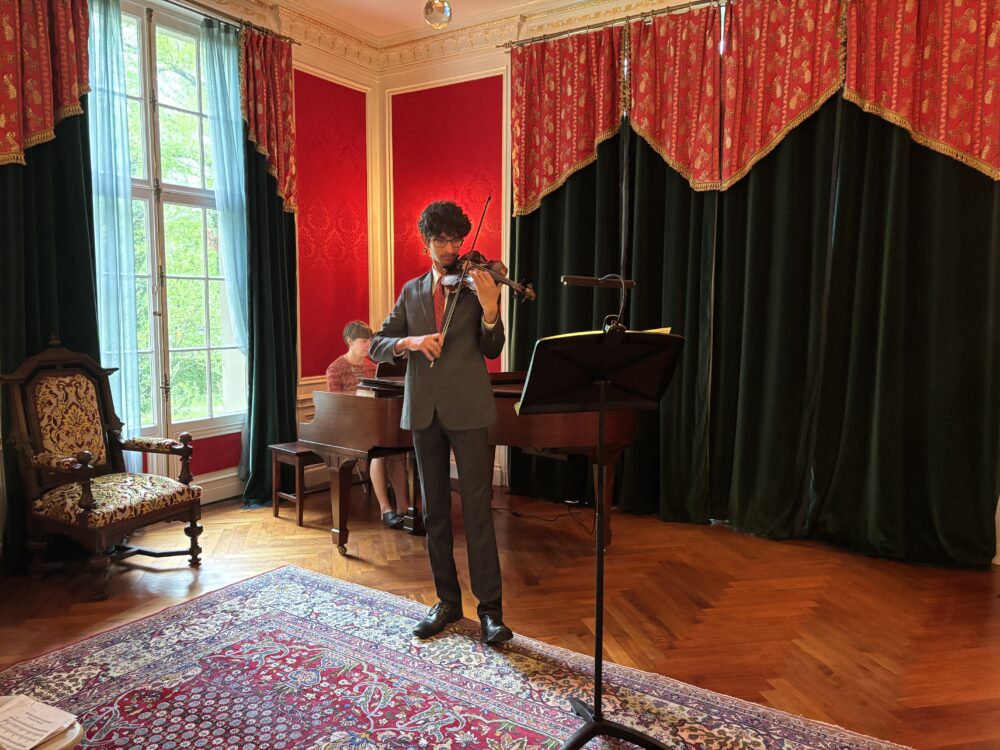
You can hear that growth most clearly in the students who have been through the Salon more than once. Lucia played the Salon this year for the second time. A year ago, she was the youngest musician in the room:
“I was in the Salon last year as a PSP musician in the intermediate orchestra. It was definitely intimidating with all the PS musicians there. They were all so good. But I got a lot of support throughout the whole experience, and that brought more to me as a musician. It was a really powerful experience, especially being able this year, as a PS musician, to bring that.”
The intimidated young violinist of a year ago is a more self-assured musician now. That is how Sinfonia works at its best: students are supported, they grow, and they begin to understand what they can give back. For Alex, that connection is even more direct:
“I’ve been on financial aid since I joined as a freshman, and I’ve changed so much as a musician since then, in so many ways: in collaboration, musicality, in leadership. This opportunity to give back to Sinfonia is something I really wanted to take advantage of. That’s why I’ve done the Salon three times.”
What the students returned to, again and again, was not only musical growth but a sense of belonging. Vrishab called the Salon a good metaphor for Sinfonia itself: an intimate setting that mirrors what the orchestra aims to achieve, a place where students can interact and share ideas with their conductors, “a sort of close-knit family.” Jeffrey said the same thing from a different angle. The students all play together in PS and put on great concerts, he said, but each has a different personality and a different style, and the Salon brings those individual voices forward. Despite all that variation, he added, “we’re all really close.”
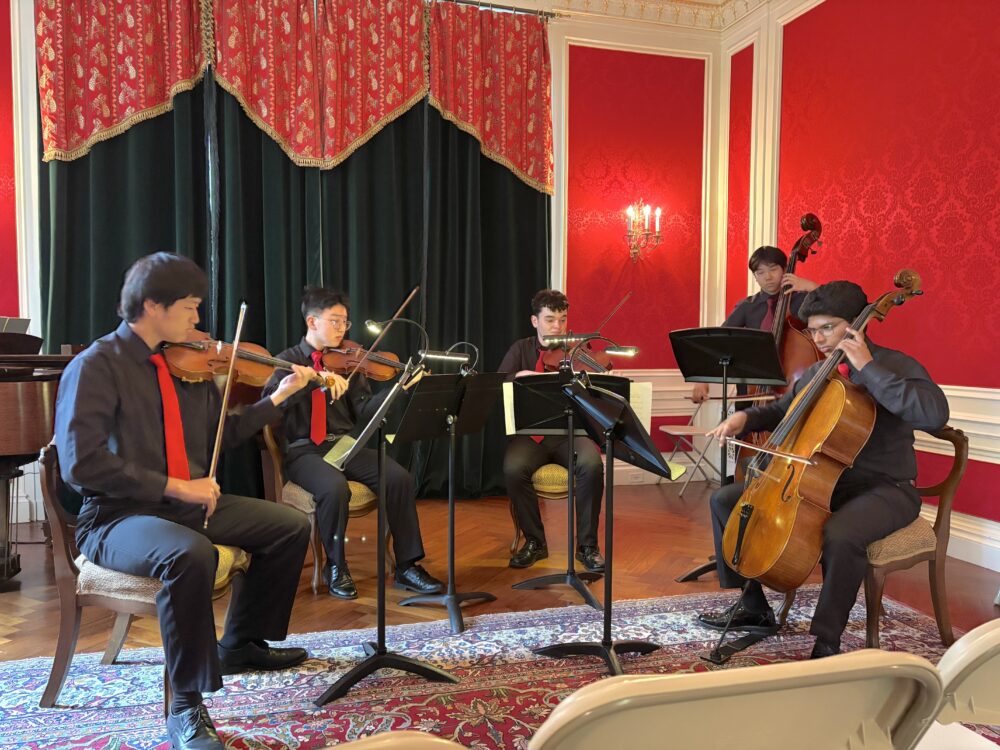
For Elliott, a violinist in PS and PSCO, the answer to what he hopes audiences take away from the Salon was the simplest of all. “It’s fun,” he said. “Just fun.”
The Salon raises the scholarship support that allows students like the ones in this story to be part of Sinfonia in the first place. Some of them are here because of that support. All of them are part of the community it builds. As Alex put it, not everyone can afford an organization like Sinfonia, and the scholarship “turns what would be a limited experience into something that can be open for anybody.”
A door held open. A student walks through. Years pass. And one afternoon, that student steps forward at the Salon to hold the same door open for someone else.