
News
When Growth Becomes Responsibility
April 17, 2026
Last week, we began telling the story of Sinfonia in our students’ own words: audition nerves, first rehearsals, and the earliest sense that this just might become a place to belong. Those first moments matter. They are often filled with uncertainty, but they are also the beginning of something much larger.
This week, we turn to what comes next.
At Sinfonia, growth does not stop once a student has found a place in the ensemble. Over time, students are asked to do more. They are challenged by harder music, bigger expectations, and a deeper responsibility to the musicians around them. What begins as participation gradually becomes ownership. What begins as learning one’s part becomes learning how to help shape the sound, culture, and success of the group as a whole. That movement from belonging into responsibility is one of the most important parts of a young musician’s development, and it is especially visible in Philadelphia Sinfonia Players.
For students who move from Philadelphia Sinfonia Strings into Philadelphia Sinfonia Players, the shift is real. The repertoire is more demanding. The ensemble is larger. The musical expectations are higher. Students are no longer simply learning how to play with others. They are being asked to grow in confidence, consistency, and awareness. They must listen more closely, prepare more thoroughly, and begin to understand their role not just as individuals, but as contributors to something bigger than themselves. That is one of the reasons PSP is such an important step in the Sinfonia journey.
Noah Shannon, now in his second year with Sinfonia, knows that transition well. After spending last year in PSS, he moved into PSP and immediately felt the difference. As he put it, “The difficulty going from PSS’s repertoire to PSP’s repertoire was a fairly big difference. It’s more demanding. You have to put more work in.” That is a simple statement, but it captures something essential. Growth in a young musician does not come only from feeling comfortable. It also comes from being stretched just beyond what felt easy before.
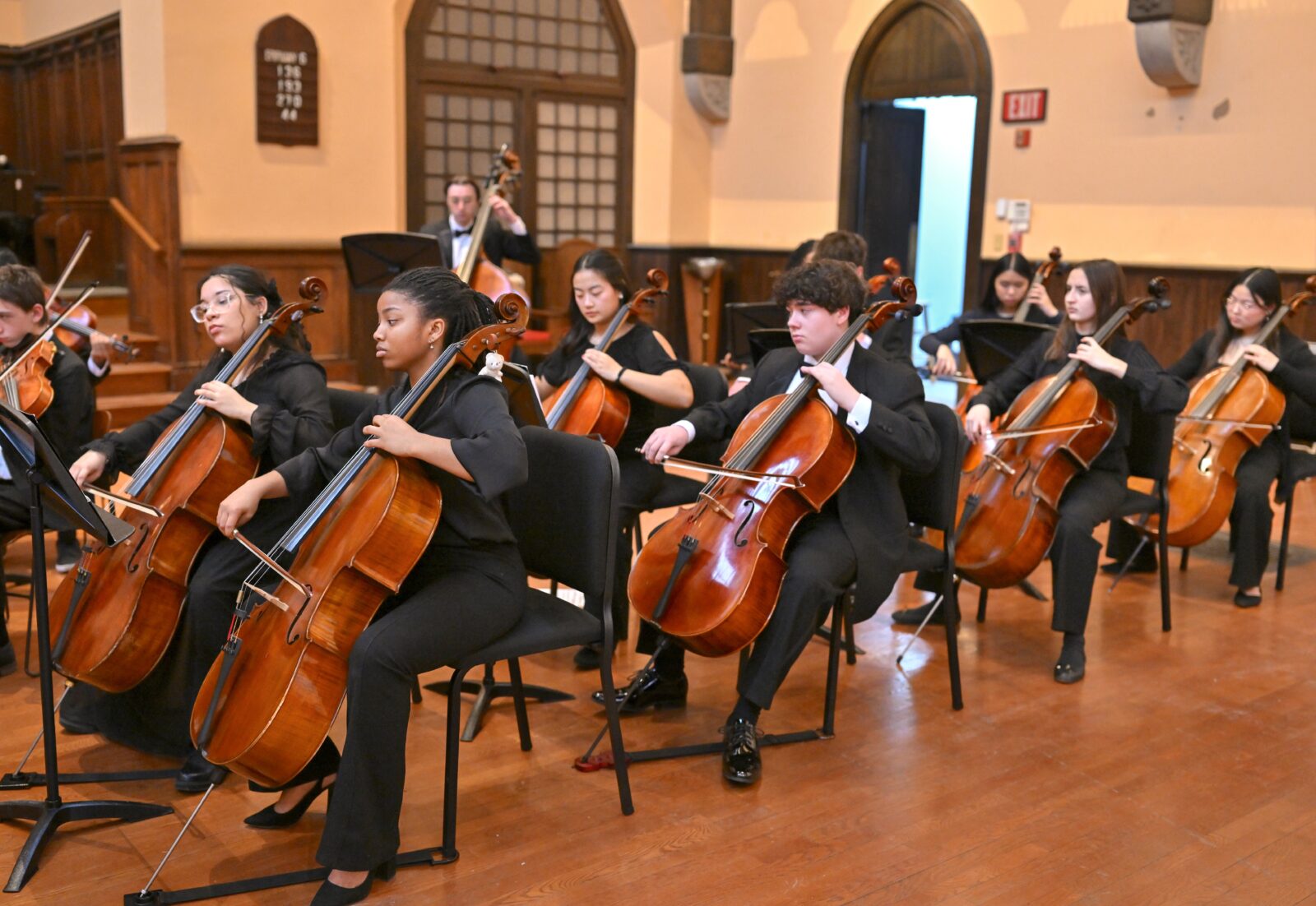
Grier Gajan, now first chair viola in PSP, described a very similar moment when he first encountered the music at this level. “When I saw the music at first, I was like, ‘What is this? I don’t know if I’m going to be able to play this.’” It is easy to imagine that feeling. Many young musicians know exactly what it is like to look at a new score and realize that the next step is going to ask more than the last one did. More practice. More patience. More determination. More belief in one’s own ability to grow.
But what makes Sinfonia different is what happens next.
Students are not simply handed difficult music and left alone with it. They are met with guidance, encouragement, and a culture that helps them rise to the occasion. The challenge is real, but so is the support. That balance matters. Young musicians grow best when standards are high and encouragement is steady, when they are asked to stretch and are also given the tools, teaching, and community they need to meet that challenge. That is something students themselves recognize clearly.
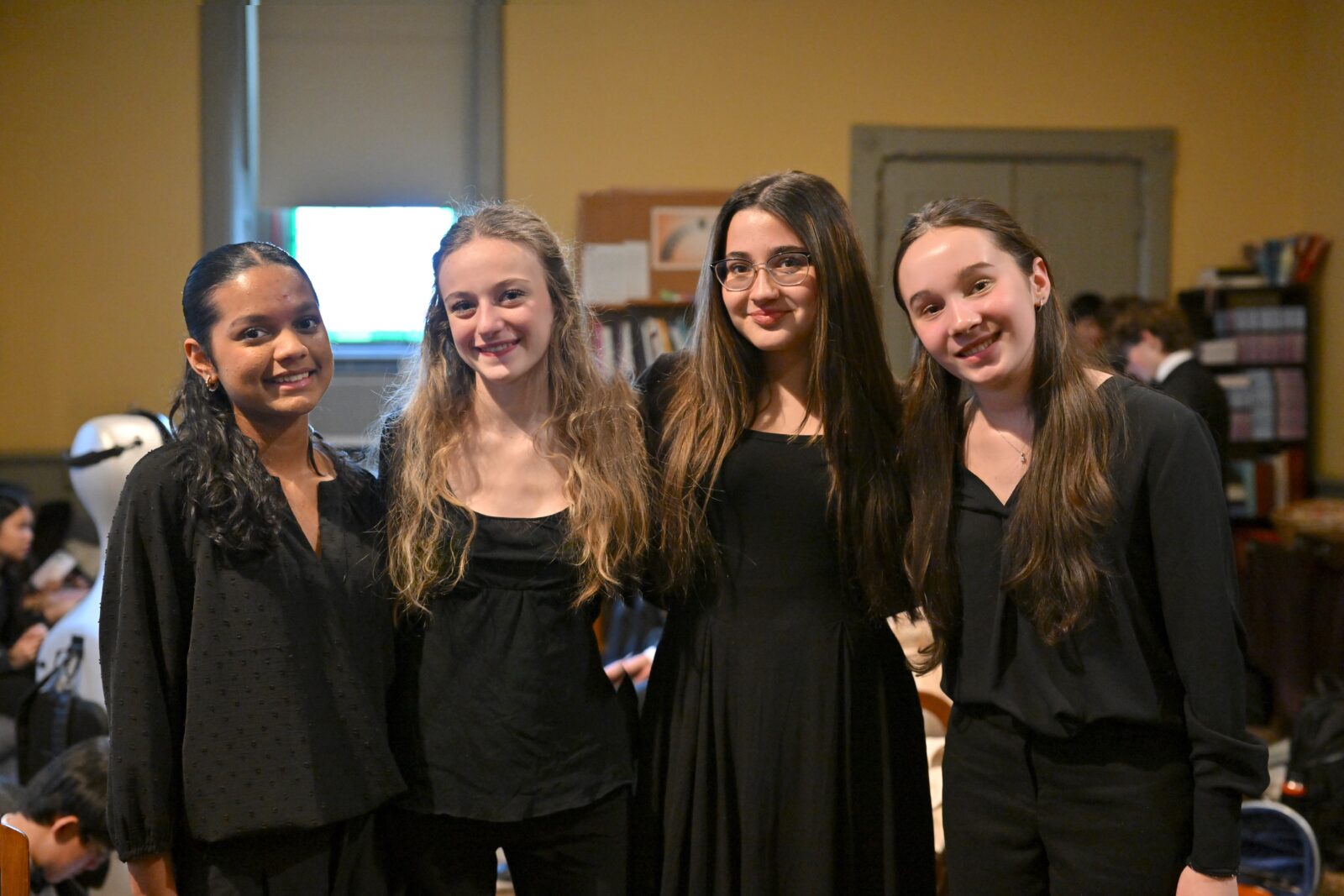
Nate Zhu, a percussionist in his first year with PSP, described Sinfonia in strikingly human terms. He said, “It’s a lot more forgiving. It makes you feel like you’ve been thanked for all your work.” That is not the way students usually talk about highly demanding musical environments, and that is exactly why it stands out. Serious musical growth does not have to come through intimidation. It can come through challenge paired with kindness, discipline paired with welcome, and expectations paired with real care for the student behind the instrument.
Nate also spoke about how much he has changed since the start of the year: “I’ve improved a lot. Before, I feel like I was just first starting out, but now I feel like I’ve gotten ten times better.” There is something wonderfully direct about that. Students often know when they are growing, even if they cannot always explain every technical reason why. They feel it in their playing, in their confidence, and in the way the ensemble begins to feel like a place where they truly belong and contribute.
That growth changes more than how students play. It changes how they begin to see themselves within the orchestra.
For Grier, the change from being a newer member of the section to becoming first chair viola brought with it a new sense of responsibility. He did not describe that transition as easy or automatic. In fact, he remembered the uncertainty that came with it: “Will I succeed at this? Are the people in my section going to like me? Am I going to be annoying?” Those questions are deeply human, and they remind us that student leadership is rarely about instant confidence. More often, it grows slowly. A student is given responsibility, feels the weight of it, and then gradually learns how to carry it well.
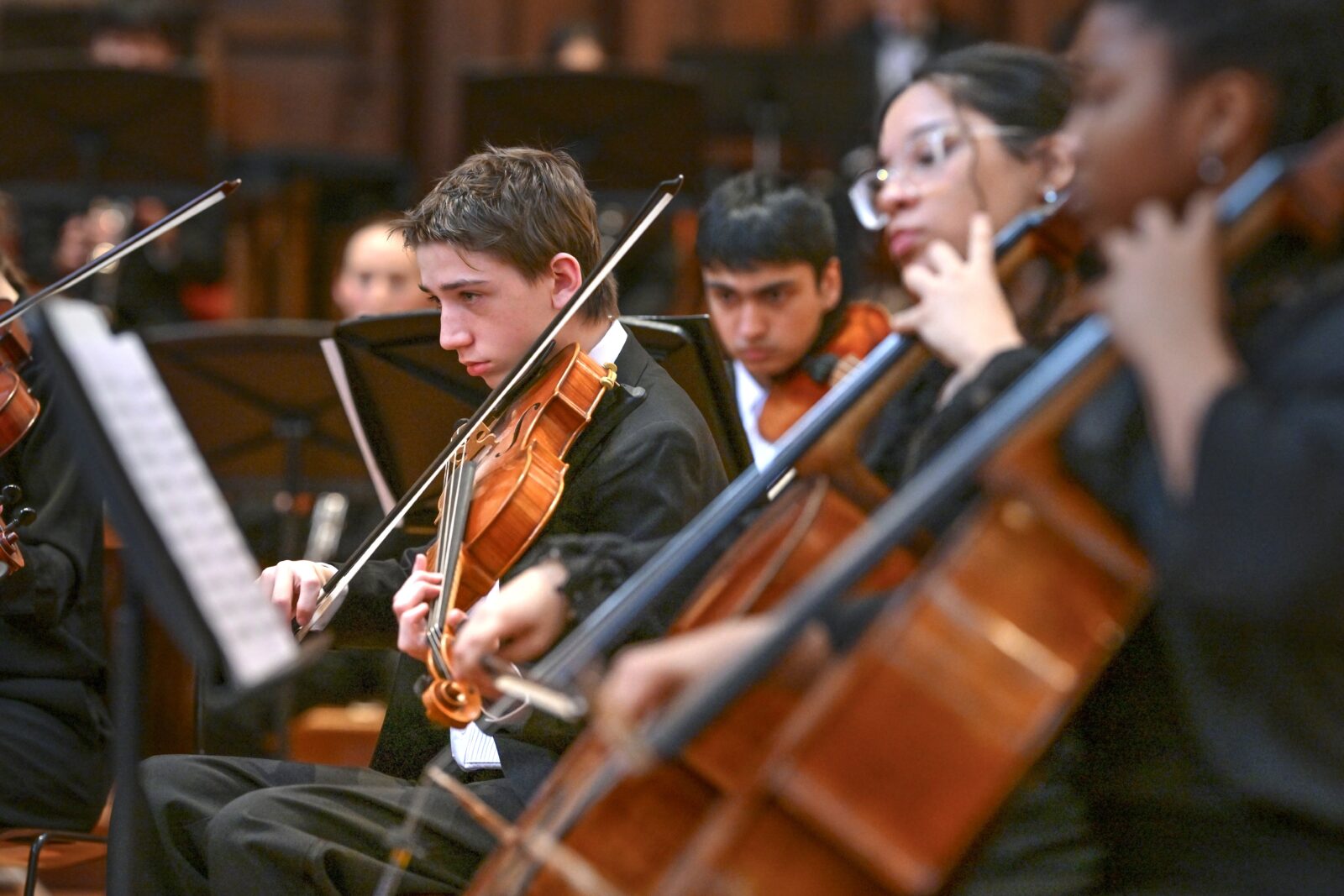
Over time, Grier began to settle into that role. “When they started asking me things, and I told them how to improve, I felt more comfortable. I could say, ‘Okay, here we can do this, here we can do that.’ And that made me feel good.” That is the sound of leadership beginning to take shape: not leadership as status, but leadership as service, guidance, and example. It is one thing to play one’s own part well. It is another to help others play theirs better too.
Noah sees that same idea reflected across the organization. In his words, “We look up to PS because they’re our older role model group, but PSS looks up to us now because we’re their older group. That’s where they’ll be next time they audition.” That observation gets at something powerful within Sinfonia’s structure. Students are always learning from someone ahead of them, and, before long, they discover that someone is learning from them as well. The result is an environment where leadership is not abstract. It is lived week by week, stand by stand, rehearsal by rehearsal.
One of the most memorable examples of that responsibility in Noah’s story comes from last year, when he broke his elbow and could not play for months. Even so, he continued showing up. “I still showed up every week and helped my section. Even though I couldn’t play, I still worked.” That kind of commitment says a great deal about what students are learning here. Responsibility is not only about playing well when everything is going smoothly. It is also about showing up for the ensemble, staying engaged, and contributing however one can. That kind of devotion to the group is part of what turns a collection of young musicians into a true community.
This is what growth and responsibility look like at Sinfonia. Not just harder music and higher expectations, but a deepening commitment to the ensemble, to one another, and to the work itself. Students enter looking for challenge, opportunity, and connection. Over time, many begin to discover something more: the ability to lead, to encourage, and to help shape the experience of those coming behind them. That kind of formation matters far beyond the concert hall.
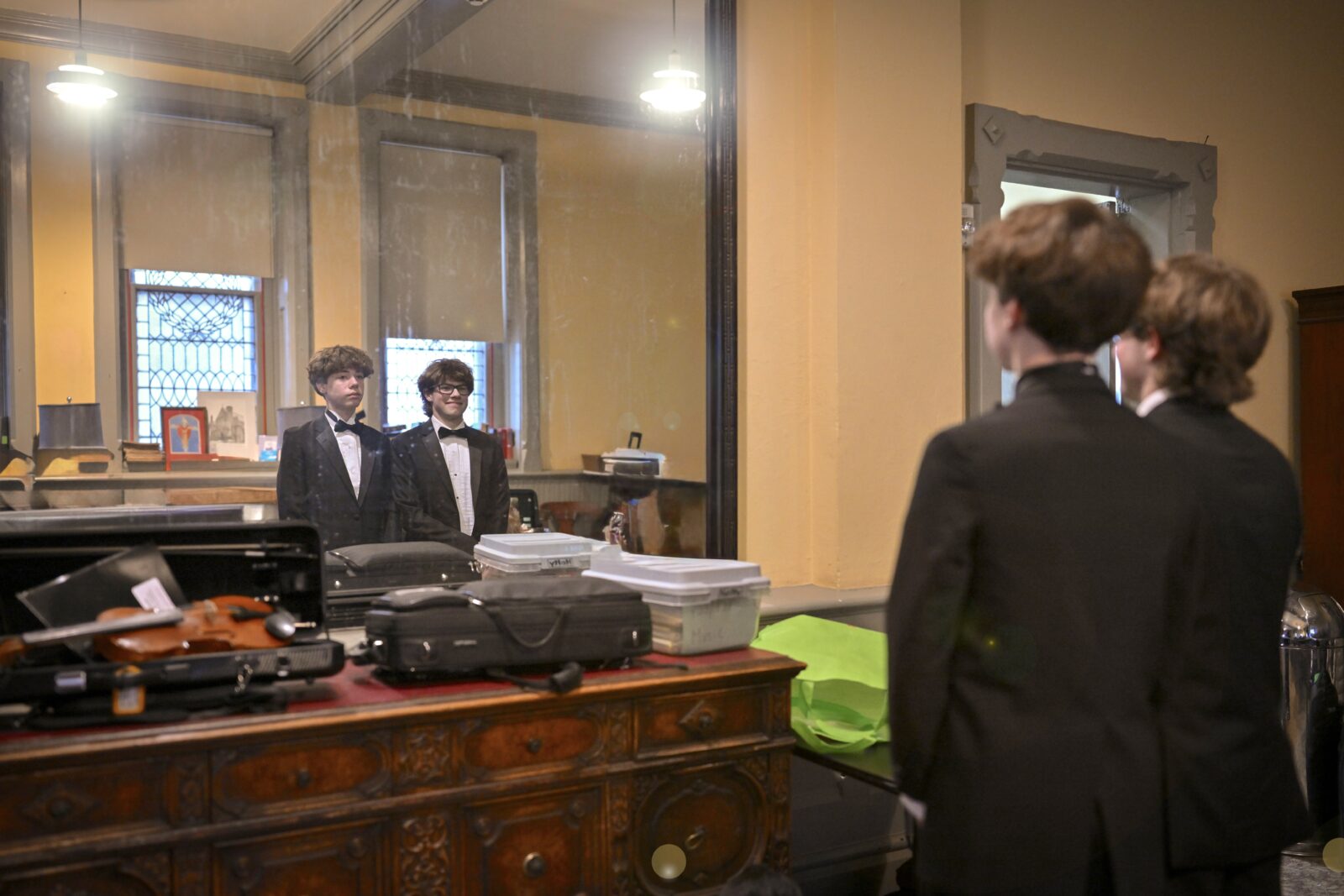
It is also why this stage of the journey matters so much. A youth orchestra is not only a place where students prepare repertoire for performance. At its best, it is a place where they learn habits that stay with them: discipline, perseverance, listening, responsibility, and trust. In PSP, those habits become more visible and more necessary. Students are asked to rise to a higher level, and in the process, they begin becoming the kinds of musicians and people others can rely on.
This spring, Philadelphia Sinfonia is raising $7,500 to support the students, teaching, and ensemble experiences that make this kind of growth possible. If you would like to support Sinfonia’s students as they grow in confidence, skill, and responsibility, we invite you to make a gift in support of this work. And we hope you will join us for the Philadelphia Sinfonia Players concert on May 17 to hear what these students have built together.
With several other concerts still ahead this season, there will be many opportunities to hear Sinfonia’s students in performance and to experience the results of their hard work firsthand. Each concert reflects a different stage in the journey, and we hope you will join us for these upcoming performances as the season moves toward its final bow.
We are also looking ahead to auditions for the coming season. For young musicians who are ready to grow in skill, confidence, and ensemble responsibility, Sinfonia offers a place to be challenged, supported, and inspired. We encourage interested students and families to learn more about audition opportunities in the weeks ahead.
From first notes to final bow, Sinfonia is helping young musicians grow into more. This week, we are grateful to celebrate what that growth looks like in Philadelphia Sinfonia Players.