
When Music Becomes Service
April 30, 2026
Last week, we explored the third movement of the Sinfonia journey, the moment when years of preparation become artistry. Through the voices of Aldo, Victoria, and Anna, we saw what happens when a student stops focusing on whether they can play the notes and starts focusing on what the notes are for. That kind of growth is the work of years. But it is not the end of the journey either.
This week, we step outside the concert hall.
On May 12, the Philadelphia Sinfonia Chamber Orchestra (PSCO) will perform at Foulkeways, a retirement community in Gwynedd. There are no tickets sold. The audience is not made up of parents or paying concertgoers. The students are simply there to play for people who asked to hear them. That difference, it turns out, changes the performance.
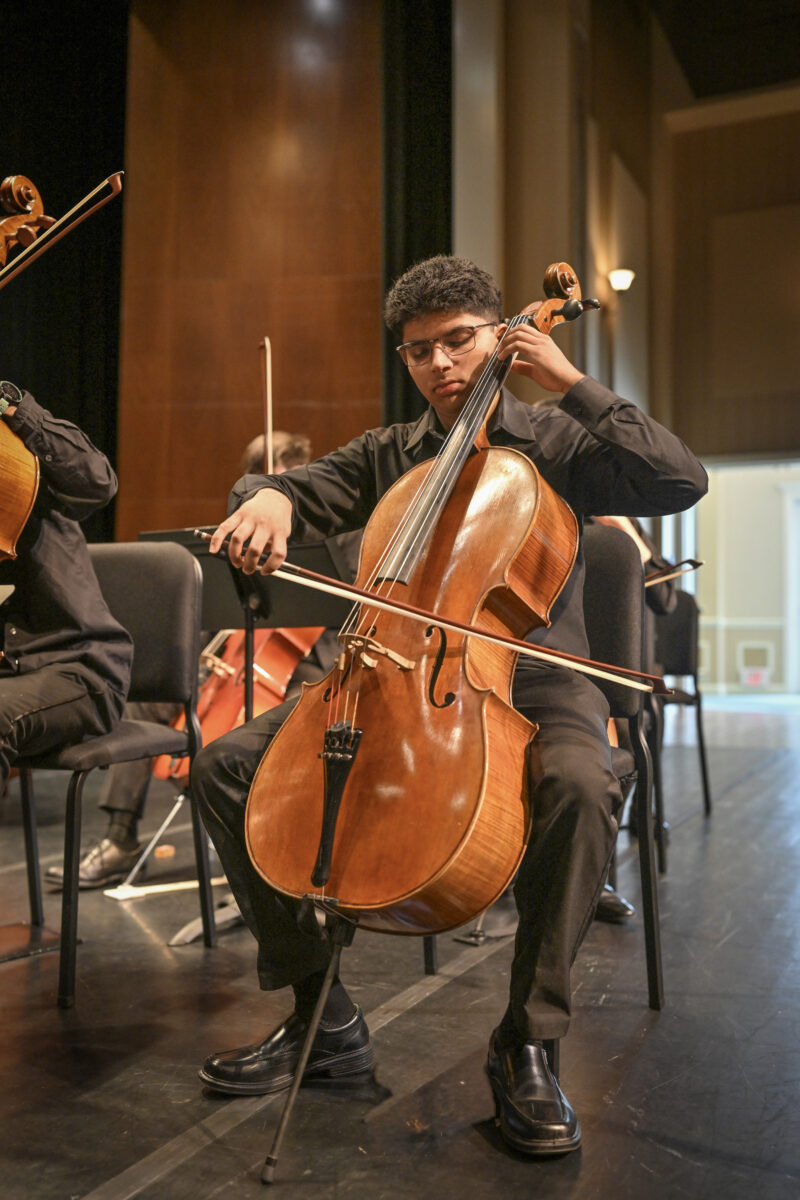
Micah Abraham, a senior and principal cellist in his fifth year with Sinfonia, has had time to think about why these performances matter. As he put it, “The true gift of music we can share with people is that we play our instruments to connect with each other, to uplift each other.” That is the purpose of music, in the words of a senior who has spent five years in Sinfonia learning that lesson. It is also the idea that animates this stage of the Sinfonia journey, when students begin to discover what their music can do outside the concert hall.
It does not take five years to begin to understand that idea. Akash Vadali, a first-year PSCO violinist, has already started thinking about his playing differently. “I see music not just as a way to show off, but as a way to give back to the community,” he said. “It is so sentimental when I play. I feel more connected to music after coming to Sinfonia.” That shift, from playing to an audience to playing for people, is not abstract for him. He saw it take shape in March, when PSCO performed at Shannondell, another retirement community in the area. As he described the experience, “Experiences like that are important because they teach us how to become more connected with the community. Music is all about connection, not just playing.”
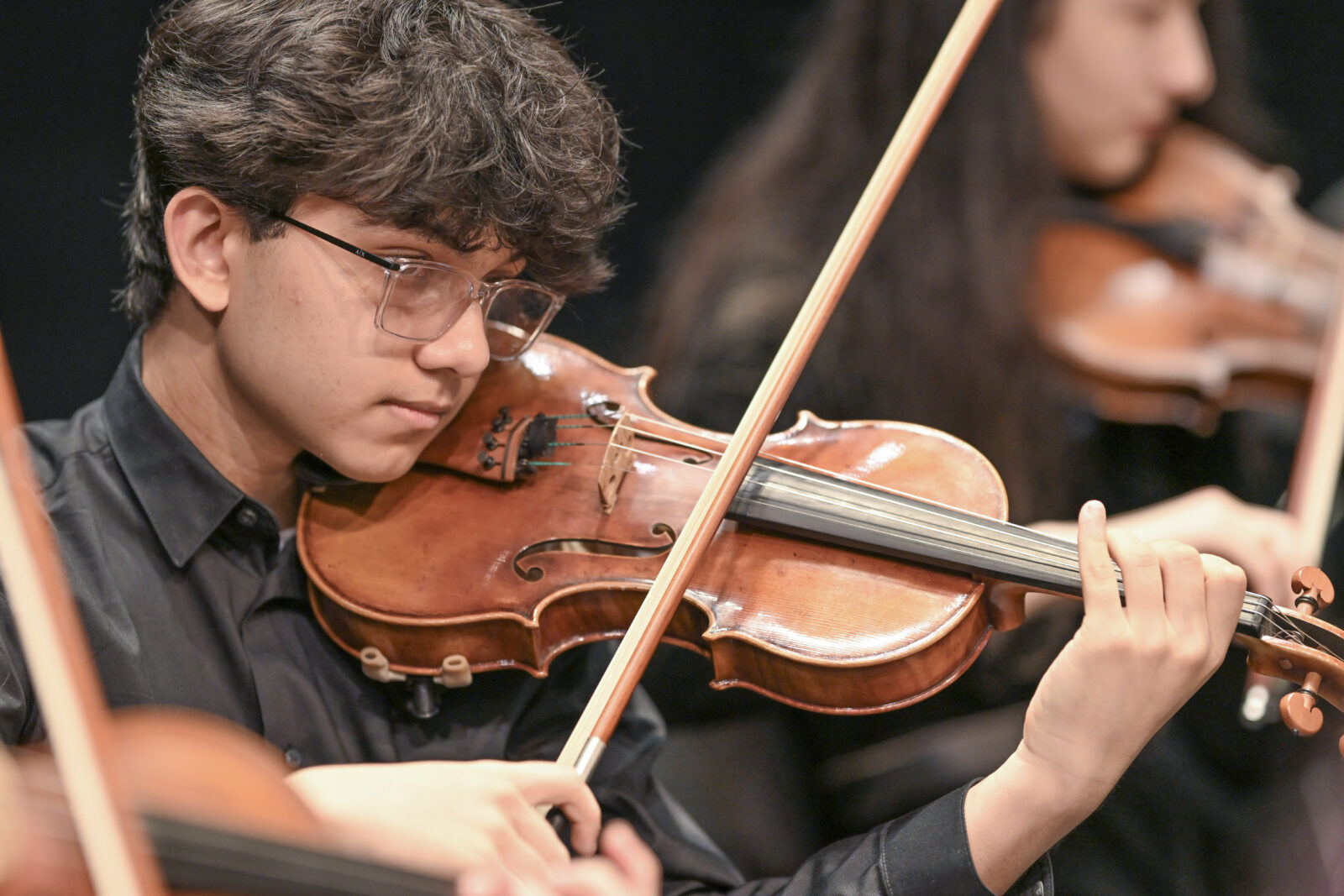
A different kind of audience makes a different kind of player. The audience at a retirement community is not listening for technical perfection. They are listening for the music itself, and they are generous with it. Akash noticed it right away at Shannondell. “Even when we made a few mistakes,” he said, “they were still encouraging us, cheering us on. It boosted our confidence and made us play even better.” Most of these students have never been received that way before. Playing for an audience that wants nothing but the music itself is a new experience, and it changes them.
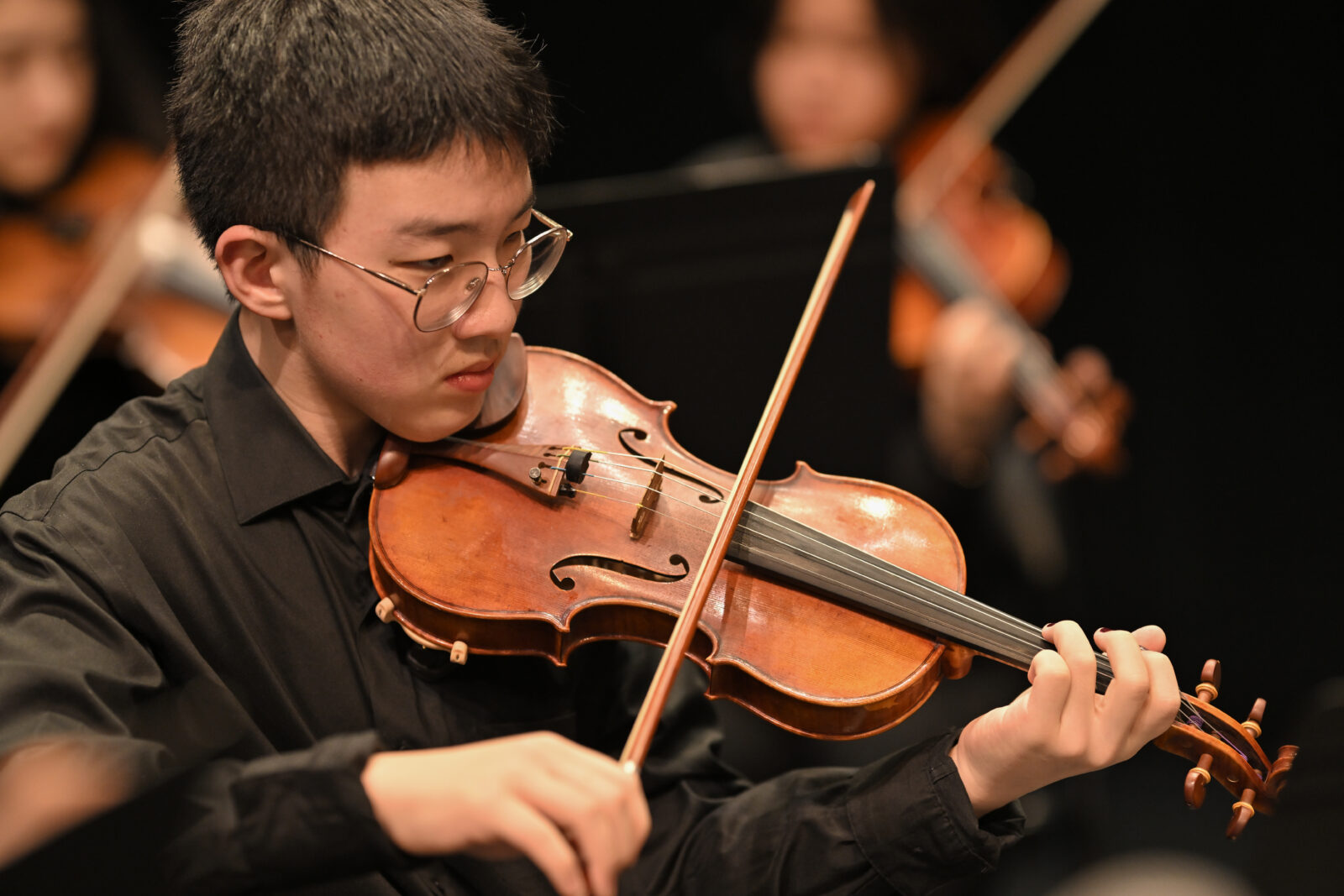
Elliott Zhang, a fourth-year violinist who plays in both PS and PSCO, has noticed something else about these performances. The feedback does not stop when the last note ends. As he described it, “When we volunteer to play for retired people, every single time afterward, Ms. Garrett tells us, ‘They really enjoyed your performance and they are really looking forward to the next one.’ You don’t hear that a lot for the regular PS concerts. It really makes you happy to know that you are bringing joy to other people’s lives.” For students trained to prepare, rehearse, and perform at a high level, that kind of response matters. It reminds them that music is not only something to be judged or perfected. It is something offered, received, and remembered.
For Micah, that understanding has grown into something larger. He has come to see these performances as part of a longer conversation between generations, a conversation in which young musicians have something specific to give. As he put it, “When we play in senior homes, for people who have already done a lot for their community, it means a lot. They have paved the way for others. We get to pay that forward. We are keeping that cycle going.” That is the lesson at the heart of this stage of the Sinfonia journey. Music is not only a discipline to be mastered or a skill to be displayed. It is a way to connect with people. It is a way to honor those who came before. It is a way to give something to a room of people you have never met, and to discover, in the giving, that the music you have spent years preparing was always meant to be shared.
This is what Sinfonia students learn alongside the music itself. The technique, the artistry, the years of patient teaching, all of it points toward this. Music is not only for the stage. It is also a way to connect, to give back, and to bring something meaningful to a room of people they may never have known otherwise. The students who walk into a first audition do not yet know that the journey they are beginning will lead them here. But it does. By the time they reach PSCO, they have begun to understand it. By the time they reach their final concerts with Sinfonia, they know it for themselves.
This spring, Philadelphia Sinfonia is raising support for the students, teaching, and ensemble experiences that make this kind of growth possible, on stage and off. If you would like to support Sinfonia’s students as they learn what their music can do for others, we invite you to make a gift today.
Two final concerts remain in this season. PSP performs on Sunday, May 17 at 3:00 PM at the Temple Performing Arts Center. On Friday, May 22 at 8:00 PM, Philadelphia Sinfonia takes the stage with the Philadelphia Pops at the Perelman Theater for an America250 concert closing the season. We hope you will join us.
We are also looking ahead to auditions for the 2026-2027 season. For young musicians ready to be taken seriously as artists, ready to be challenged with serious repertoire, and ready to discover what their music can mean to other people, Sinfonia offers a place to grow.
From first notes to final bow, Sinfonia is helping young musicians grow into more than just better players. This week, we are grateful to celebrate what that growth looks like, in the quietest and perhaps most meaningful rooms of the Sinfonia season.